Finding Migraine Relief at Home: What to Do Before, During, and After an Attack
The moment you feel one coming on, you are already making decisions.
Do you push through or stop what you are doing? Take medication now or wait and see? Reach for the ice pack or lie still and hope it passes? After ten years of managing chronic migraines at home, alone, with no one to bring me a glass of water or turn off the lights, I have learned that the difference between a manageable attack and a full vampire day often comes down to one thing: how fast and how accurately you read your own body.
This is not a list of generic tips. This is what I actually do, in order, and why.
Before You do Anything, Try to Understand Where it is Hitting
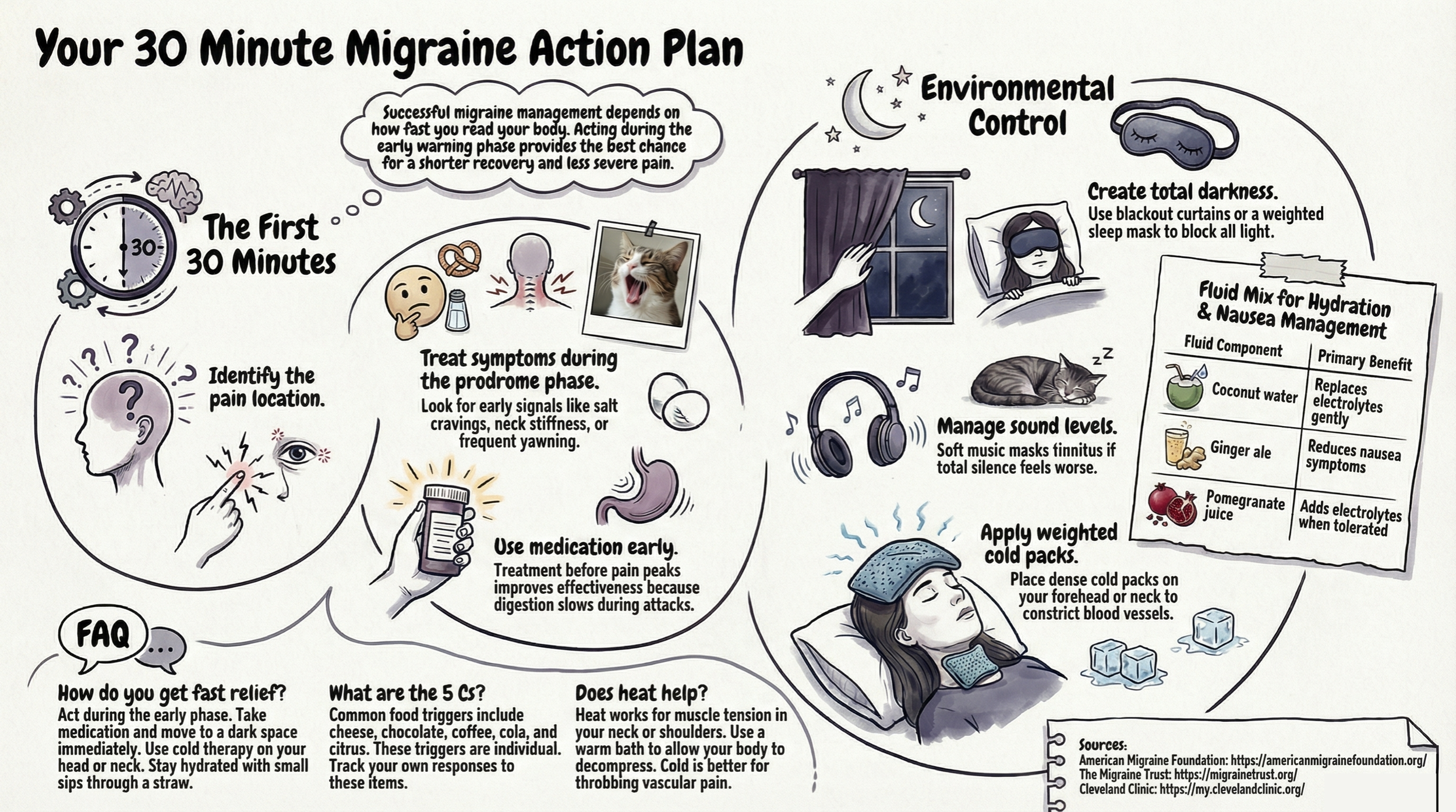
Before you reach for anything, spend 30 seconds identifying where the migraine is starting.

Is it coming from your neck or the base of your skull? Is the pain behind your eye or spreading across your forehead? Is it in your jaw or cheek area? Has an aura started forming, or has the pain reached your teeth?
Location matters because different migraine presentations respond to different approaches. I work with my doctor on location-specific treatment options, and if you are not already having that conversation with yours, it is worth starting. A lot of people assume they have one kind of migraine and therefore only need one kind of treatment. In reality, you can experience different migraine types that respond to completely different interventions. Getting that clarity with a neurologist or doctor changed how I manage mine.
If you are out when a strong migraine starts, it is important to carefully evaluate your symptoms and prioritize getting yourself to a safe, dark, quiet place as quickly as possible. Do not push through. Get home.
Early Warning Signs you Should Not Ignore
Most migraines do not arrive without warning. The prodrome phase, the hour or days before the migraine attack, often sends signals that your nervous system is ramping up. Learning to recognise yours gives you a window to act before the pain takes over.
Common prodrome signals I experience include:
Cravings for salty foods or something chewy
Neck stiffness or tension creeping up the base of the skull
Pressure along the forehead or jaw area
Yawning more than usual
Mood shifts, feeling low, irritable, or flat without a clear reason
Light starting to feel slightly more annoying than normal
Jaw tightness
For me, the cravings and an increase in pressure along my jaw, forehead, or neck are one of the clearest signals. If I suddenly want chips or candy when I was not hungry five minutes ago, I pay attention.
The American Migraine Foundation has a detailed overview of the prodrome phase and how to use it as an early intervention window.
Acting in the prodrome phase does not always prevent the migraine. But it can give you a clear warning sign to move somewhere safe for the attach and it gives your body the best chance of a less severe attack and a shorter recovery.
What to Do in the First 30 Minutes
This is what I do when I feel a migraine building.
First, I identify the location as described above. Then I work through these steps based on what I am feeling.
To relieve neck and shoulder tension building at the base of my skull, I apply a muscle-relaxant cream to the area. The goal is to try to release the tension before it locks in and climbs higher.
For jaw tension or pain setting in around the cheek or teeth area, I start chewing gum. It sounds almost too simple, but controlled chewing can help relax the jaw muscles that are tightening. I also reach for something cold to eat or drink at this stage. Ice cream or a cold smoothie works well.
For any migraine with a light sensitivity component, the blinds go down immediately. I put on sunglasses if I need to keep moving around the space. My eyes are among my most reliable early warning systems. When light starts to feel like it is burning rather than just bright, I know the migraine is progressing.
I consult with my doctor about medication options and take whatever is appropriate for the type of migraine that is developing. I cannot stress this enough: do not wait. Taking medication early, while the migraine is still building, is significantly more effective than waiting until the pain peaks. By then, it is often too late for the medication to do its best work.
The Migraine Trust has clear guidance on why early treatment matters.
Creating Your Migraine-Safe Environment
On what I call my vampire days, light does not just bother me. It burns. My eyes become intensely sensitive to any level of brightness, and even the glow from a phone screen or the gap under a door can be enough to make things worse. If you experience migraines with significant photosensitivity, you already know exactly what I mean.
Getting your environment right quickly is one of the most important things you can do during an attack.

Blackout curtains are genuinely worth the investment. Close them, then close the door. If you do not have blackout curtains, a sleep mask, particularly one you keep in the freezer for added cold works. The goal is as close to total darkness as possible.
Sound sensitivity is the other side of this. During a bad migraine, ordinary sounds, a conversation in another room, a car outside, and the hum of a television, feel louder and more intrusive than they should. Silence is the obvious answer, but I have found that for me, complete silence sometimes makes the head pain feel worse because there is nothing else to focus on. Soft classical music at a low volume gives my brain something gentle to land on, and when the ringing in my ears starts (tinnitus is another symptom some migraine sufferers experience during an attack), the music gives me something to focus on other than the ringing itself.
Creating a migraine-safe environment is all trial and error, and everyone’s sensitivity profile is different. But having a plan for your environment before an attack hits means you are not trying to figure it out when you are already in pain.
Cold Therapy: What Actually Works and What Does Not
Cold is one of the most effective non-medication tools for migraine relief, and the research backs it up. Cold applied to the head and neck helps constrict blood vessels, which reduces the throbbing pain associated with vascular migraines. The Cleveland Clinic recommends cold compresses as a first-line home remedy for migraine pain:
I own a migraine cap. The wearable ice hat that wraps around your head and is supposed to cover your forehead and temples. I understand the appeal, and plenty of people swear by them. For me personally, they do not work. I have thick hair, and it never stays in place for me during an attack.
What I use instead is a weighted hot/cold pack that I keep in the freezer. Mine is the kind filled with a dense material (similar to rice or beads) that gives it some weight. The gentle pressure combined with the cold provides me more relief than a standard flat ice pack sitting loosely on my forehead. I place it across my forehead and eyes, or at the base of my neck and shoulders, depending on where the migraine is centred.
If you have not tried a weighted cold pack, it is worth experimenting with. And if you are considering a migraine cap, be realistic about your hair type and how you move during an attack before purchasing one.
Where to apply cold:
Forehead and temples for eye-centred migraines
Base of the neck and upper shoulders for migraines originating from neck tension
Both simultaneously, if you have two packs
Hydration During a Migraine: The Truth about Dehydration
Here is something I hear constantly from people who have never had a migraine: “Have you tried drinking more water?”
I understand why people say it. Dehydration is a known migraine trigger, and staying hydrated is good general advice. But as a chronic migraine sufferer, I’ve found that dehydration is far more likely to be the trigger for a rebound migraine than my first attack. During a long migraine, particularly one that runs five hours or more, the risk of dehydration increases significantly because you are already going through a neurological event and often cannot eat or drink normally.
During an active attack, my approach to hydration is careful and deliberate. I mix ginger ale with coconut water. When my stomach can tolerate it, I add a small amount of pomegranate juice to help replace electrolytes. I keep it next to me and use a straw. This is not a preference thing. During a bad migraine, my hands can become shaky, and I do not trust myself to lift a glass without spilling it.
The goal is to maintain hydration without overwhelming my already-stressed digestive system. Small, slow, steady intake through a straw is more effective than trying to drink a full glass.
For electrolyte replacement specifically, coconut water is a gentler option than many commercial electrolyte drinks, which tend to be high in sugar or artificial sweeteners that can aggravate nausea.
Managing Nausea During an Attack
Nausea is one of the most debilitating migraine symptoms because it limits what you can eat, drink, and take in terms of medication. Oral medication becomes harder to absorb when your digestive system is in distress, which is one of several reasons why treating early, before the nausea sets in, makes such a difference.
For managing nausea at home:
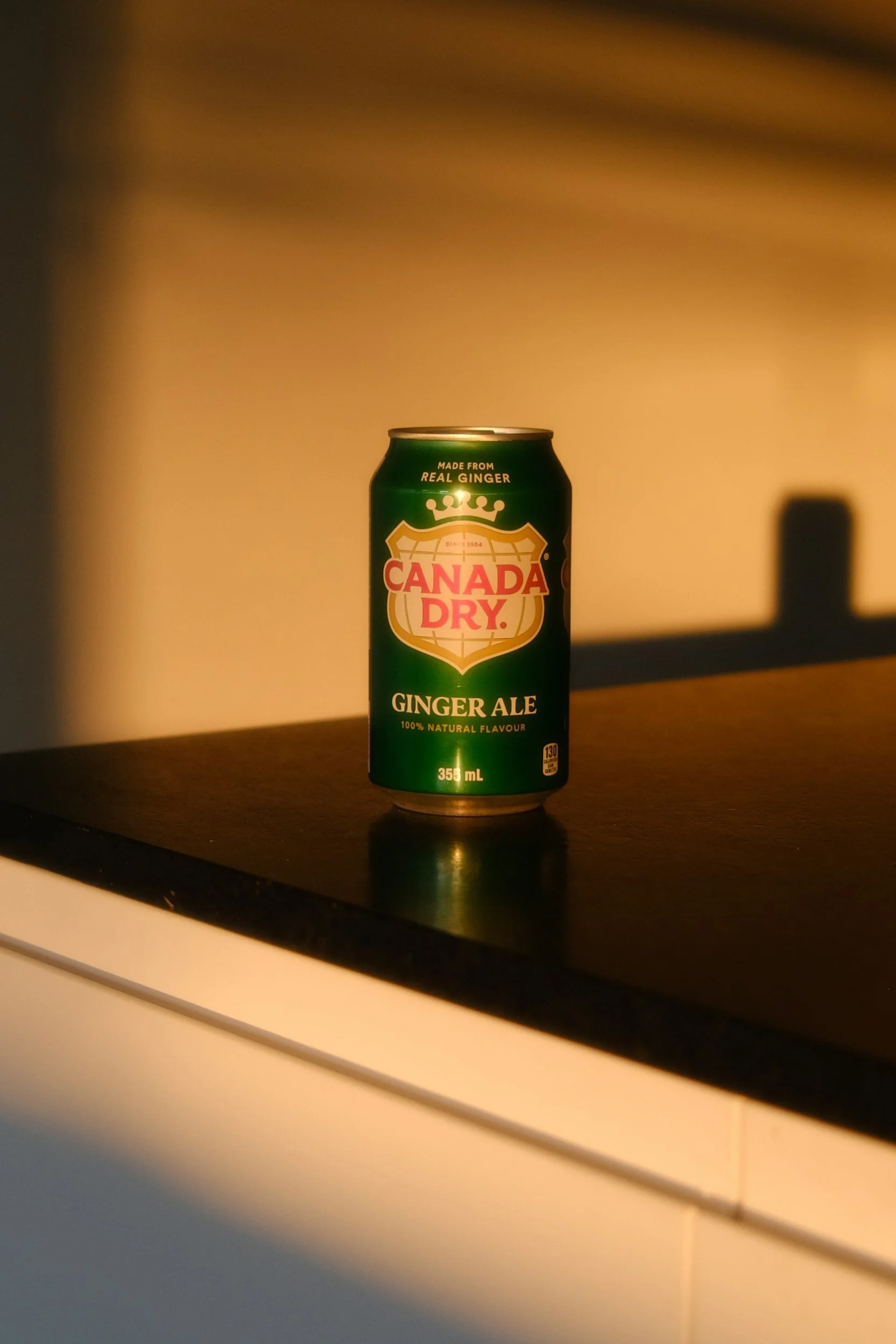
Ginger ale, cold and ideally not too fizzy, is my first reach. The ginger has mild anti-nausea properties, and the cold temperature helps. Canada Dry is my personal go-to.
Crackers or plain toast when you can manage something solid. The goal is to keep blood sugar stable without triggering more nausea.
Peppermint oil in a diffuser. I use this both for nausea and as a general symptom management tool during attacks. The scent is grounding and has some evidence supporting its use for nausea relief. One important note: smell sensitivity varies widely among migraine sufferers, and strong scents are a known trigger for some people. Test how you respond to peppermint on a non-migraine day before deciding whether it belongs in your toolkit.
A straw for all liquids, for the reasons above.
If nausea is preventing you from keeping any medication down, talk to your doctor about alternative delivery options. There are dissolvable, nasal, and injectable formats for some migraine medications that bypass the digestive system entirely.
Heat, Baths, and Releasing Muscle Tension
I often see a lot of migraine guides recommend a hot shower. I have tried it, and it does not work for me. Often, my balance is compromised during an attack, and standing becomes more difficult as an attack progresses. A hot bath is a different experience entirely.
Lying in warm water allows your whole body to decompress in a way that standing in a shower does not. For migraines that originate from or involve significant neck, shoulder, and upper back muscle tension, a bath can help release that tension in a way other interventions do not. I pair the bath with a peppermint oil diffuser running nearby and keep the room as dark as possible.
The distinction between heat and cold therapy for migraine is worth understanding. Cold is generally more effective for the vascular, throbbing pain of an active migraine. Heat works better for the muscle tension component, particularly in the neck and shoulders. If both are present, which they often are, alternating or combining both (cold on the head, warmth on the body) can address each element separately.
Caffeine: A Tool, Not a Solution
Caffeine in small amounts, taken early in an attack, can help. It works by constricting blood vessels and enhancing the absorption of some pain medications. This is why caffeine appears in several over-the-counter headache medications.
The risk is on the other end. Too much caffeine, or caffeine taken too late in the attack, can extend the migraine or set you up for a rebound migraine when it wears off. It is a narrow window, and the line between helpful and harmful is easy to cross.
If you use caffeine as part of your migraine toolkit, keep the amount small, take it early, and do not rely on it as a primary treatment strategy. The American Migraine Foundation covers the caffeine and migraine relationship in detail.
Gentle Movement and Yoga Once the Peak Passes
During the height of an attack, movement is usually the last thing your body wants. This section is for the phase after the worst of the pain eases, when muscle stiffness and tension remain and risk pulling you back toward another attack.
For me, the neck and shoulders are where that residual tension locks in. If I leave it alone, it can become the trigger for a migraine relapse. Gentle yoga, specifically aimed at releasing the neck, shoulders, and upper back, has been one of the most effective tools I have found for interrupting that cycle.
Two videos I reach for regularly:
For a more general full-body migraine relief practice
The goal is not to exercise. It is to slowly and deliberately release the physical tension that, left untreated, becomes the setup for the next attack. Take it at whatever pace your body allows.
Supplements for Prevention (Not During an Attack)
I want to be clear about this section: supplements are a preventive strategy, not an in-attack treatment. If you are mid-migraine and wondering whether to take magnesium right now, the answer is that it will not help with the current attack. This is about reducing the frequency and severity of future ones.
My current supplement regimen, recommended by my doctor as part of my migraine management plan, includes:
Vitamin B2 (riboflavin): Research published in PubMed supports B2 as a preventive treatment for migraine, with evidence suggesting it reduces attack frequency for some people when taken consistently over several months. The Migraine Trust recommends 400mg daily as the studied dose.
Magnesium: Low magnesium levels have been linked to increased migraine frequency. The American Headache Society recommends magnesium oxide at 400-500mg daily as a preventive option.
Coenzyme Q10 (CoQ10): A randomised controlled trial published in The Journal of Headache and Pain found that a combination of CoQ10, riboflavin, and magnesium reduced migraine pain and overall disease burden over a three-month period.
Vitamin D3 and iron (post-period): These are specific to my situation and added to my regimen based on bloodwork and my doctor’s recommendations. They are not universal migraine supplements, but they are part of what keeps my baseline in better shape.
Acupuncture is another preventive tool I use regularly. For me, it helps release built-up tension in the body before it can accumulate to the point of triggering an attack. The evidence for acupuncture and migraine prevention is growing. A Cochrane Review found it to be at least as effective as preventive drug treatment for some people.
Always check with your doctor and a pharmacist before starting any supplement regimen. Dosage matters, interactions matter, and what works for one person may not be appropriate for another.
Track What Works, Because Migraines are Personal
One of the most important things I did early in managing my migraines was to start documenting them. Not just “had a migraine on Tuesday” but the full picture: where it started, what I was doing beforehand, what I ate, how I slept, what I tried, what helped, what made it worse, and how long each phase lasted.
That information becomes genuinely useful over time. You start to see patterns. You identify which combinations of home remedies work for your specific migraine types. You understand which conditions tend to precede your worst attacks. And when you bring that data to your doctor, the conversation becomes much more productive.
A migraine diary does not need to be complicated. Even a basic notes app on your phone works. The consistency of tracking matters more than the format.
Your Migraine Kit: What to Keep Stocked at Home
Having what you need ready before an attack hits means you are not making decisions or moving around more than necessary when a migraine is in progress.
My home kit includes:
Weighted hot/cold pack (kept in the freezer)
Ginger ale (Canada Dry, kept stocked in the fridge)
Crackers or plain rice cakes
Coconut water
Pomegranate juice
Straws
Peppermint essential oil and a diffuser
Sleep mask or eye cover
Blackout curtains in the bedroom
Muscle relaxant cream
Chewing gum
Prescription medication (location-appropriate, as discussed with your doctor)
Electrolyte sachets as backup
Build your kit based on what you know works for you. This list is a starting point, not a prescription.
FAQ
-
The fastest relief comes from acting early. Take medication as soon as you recognise a migraine is developing, not once the pain has peaked. Apply a cold compress to the forehead or back of the neck. Move to a dark, quiet space and reduce all sensory input. Stay on top of hydration with small sips through a straw. There is no single fix that works for every migraine or every person, but early action consistently outperforms waiting.
-
The 5 C’s refer to five common food triggers: cheese, chocolate, coffee, cola beverages, and citrus fruit. These foods have been identified across patient reports as recurring migraine contributors. That said, the American Migraine Foundation notes that no scientific studies have confirmed that any food consistently triggers migraines across all sufferers. Food triggers are highly individual. The more useful approach is to track your own response to these foods rather than eliminating all five based on a general list.
-
Most migraine medications work by interrupting the neurological cascade that produces pain. That cascade is easier to interrupt early. Once the pain has peaked, your digestive system may also be slowing down due to a process called gastric stasis, which reduces how quickly your body absorbs oral medication. Early treatment means the medication reaches your system faster and has a better chance of cutting the attack short. Waiting is one of the most common and costly mistakes in migraine management.
-
Yes, particularly for preventing dehydration from extending or triggering a follow-on attack. During a long migraine, especially one involving nausea or vomiting, your body loses fluids and electrolytes that need to be replaced. Coconut water, electrolyte sachets mixed into water, or a gentle sports drink can all help. Avoid high-sugar options if your stomach is still sensitive. The goal for hydration during an attack is to be steady and gentle, not to consume a large volume at once.
-
For some people and some migraine types, yes. Heat is more effective for migraines with a significant muscle tension component, particularly in the neck and shoulders. A bath allows full-body relaxation in a way a shower does not. It is less effective for the acute throbbing phase of a vascular migraine, where cold is generally the better choice. If both tension and vascular pain are present, using cold on your head while soaking in a warm bath can help to address both at once.
-
If a family member or colleague is having a migraine when they are with you, the most useful things you can do are practical and low-effort. Offer them a quiet, dark space to lie down. Help them get home if they are not there already, as driving during a migraine is not safe. If they visit you regularly, keeping a few basics at your place, such as some ginger ale, a cold pack, and a spare sleep mask, this means they are not stranded without their usual tools. At work, the most supportive thing you can do is reduce sensory overload: lower the lights near their desk, avoid loud conversations nearby, and help them get out of bright, noisy spaces without making it a big deal. Ask what they need rather than assuming, and then follow through quietly.
Ready for more?
Managing migraines at home is one piece of a larger puzzle. Browse our blog for more articles on surviving migraine attacks at work, understanding your triggers, and what the recovery phase actually looks like.
QUICK ANSWER: The most effective migraine relief at home starts before the pain peaks. Identifying where the migraine is coming from, reducing light and sound exposure immediately, treating early with medication if you have it, using cold therapy on the right areas, and staying hydrated with the right fluids all make a real difference. What works varies by person and by attack, so tracking your responses over time is one of the most practical things you can do.
